GRP - A high quality plastic
Duromers, such as GRP, have excellent properties. They are cheap to produce, very stable, durable, lightweight and weatherproof. Due to these characteristics, they are used in numerous industries.
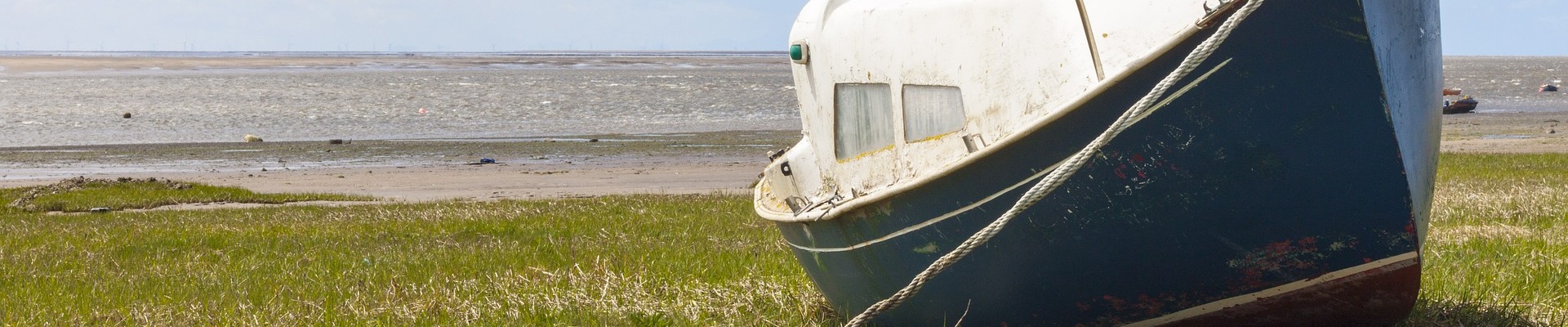
Its use is widespread in the boat industry. Since the 70s and 80s of the 20th century, a large part of sailing and motor yachts are made of this composite plastic. Accordingly, several 100,000 recreational boats have been produced and sold in recent years. The life span of such a GRP boat is about 50 years. The boom around the boats started in the 70's of the last century, which is why many boats will reach their "End-of-life" (EOL) in the next few years and need a sustainable disposal.
In addition to recreational vessels, rotor blades of wind turbines are also made from GRP components. Because the energy of the future is to come from renewable sources, there will also be increased reliance on wind energy (e.g. offshore parks in the North Sea and Baltic Sea). As a service life of approx. 20 years is expected, more and more wind turbines will reach their EOL in the next few years and will have to be disposed of appropriately.
The industry also uses GRP in large quantities as a construction material for pipes, profiles, components for automobiles, etc. The manufacture of GRP products generates production waste which is estimated to correspond to around 10% of the annual production volume.
Increasing demand for recycling solutions
Due to the excellent properties of glass fibre reinforced plastics, their production has been increasing continuously for several years. In 2019, more than 1.141 million tons of this material were produced across Europe, with continuous growth forecast for the coming years. At the same time, the amount of GRP components that reach their EOL and need to be disposed of is also increasing. Already today, > 200,000 tonnes of GRP waste have to be disposed of in Europe per year, with volumes set to rise significantly in the future.
Because this topic has been given little importance in the past, there is currently a disposal problem that threatens to worsen. Sustainable GRP recycling is therefore urgently needed. To date, however, no recycling method in the sense of the circular economy has become established on the market.
This is where we come in. In keeping with our name, we look for innovative and sustainable solutions to create something new from the old.